

International express shipping tracking provides real-time visibility of a parcel's journey from pickup through customs to final delivery. Express couriers like DHL, FedEx, and UPS update tracking every 4–12 hours. Research shows that 24% of online shoppers make repeat purchases from brands offering shipment tracking — making it a direct driver of customer loyalty and revenue.
Offering out-class products is essential in eCommerce. However, the last few years have observed a shift in client priorities. Consumers nowadays heavily consider their wholesome experience purchasing from a brand more than the item or service itself.
86% of clients are willing to pay more for a product from a company that offers a top-class shopping experience. From customer service to delivery shipment, these are some factors that affect the customer experience.
Arguably, one of the chief factors is the provision for shipment tracking. 24% of online shoppers said they are likely to make repeat purchases from a particular brand that offers shipment tracking. According to the respondents, shipment tracking allows them to plan their day accordingly without postponing tasks because they have to wait longer for their packages to arrive.
Offering shipment tracking is a means for retailers to be competitive within the eCommerce industry. This article explores the importance of international express shipping tracking including practical ways to implement it and best practices in improving shipment tracking usability.
What Is International Shipment Tracking?
Express shipping is an exclusive service offered by multiple carrier companies to shorten the delivery time for orders, thus expediting the shipping process. Express shipping is carried out by air in the case of international transport.
Most shippers use the express shipping service for orders that need urgent delivery. Also, the service is used when goods are classified as time-critical or with an immediate timeline assigned with little prior notice.
eCommerce has made clients more demanding. Aside from having a plethora of choices at their fingertips, they want a great wholesome purchase experience. Shipment tracking is a beneficial way to build open communication lines and build trust with clientele. It involves communicating the order status of each step in the shipping process.
Order tracking differs from retailer to retailer. It can entail real-time tracking, estimated delivery dates, and updating the order status.
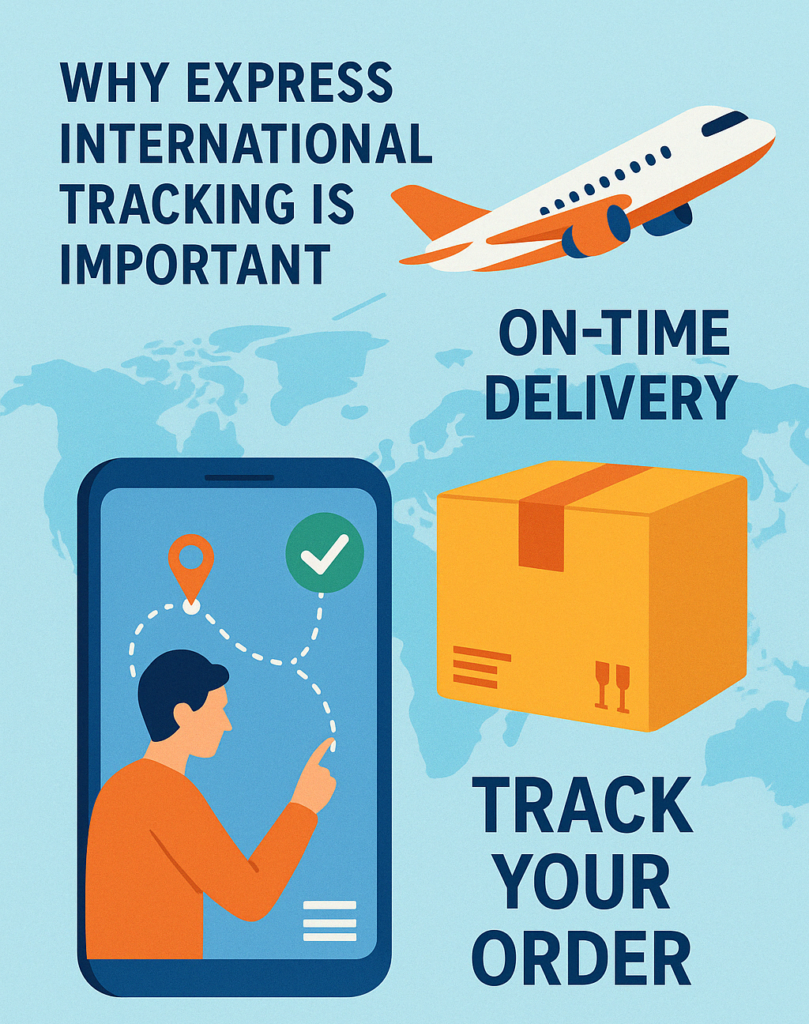
Why Express International Tracking Is Important
As a client, it is reassuring to know when a parcel you order will arrive at your destination. For instance, if it is a last-minute surprise or gift, it could be important for the order to reach on time exactly as promised.
Your freight delivery arriving when you expect it to is no less challenging, and having your thumb on the pulse of your shipping network will cause a multitude of benefits.
Many larger courier companies track deliveries by inserting a Transportation Management System, or TMS. Having an accurate TMS in place permits you to not only track your international express shipment, but to get to know your shipping routes, handle audits and recipients, project ways to cut costs, and reduce costly mistakes.
The information compiled from a thorough transportation management system will give you valuable data to optimize your shipping methods and keep you competitive.
Based on ShippingToGo's analysis, businesses that implement dedicated shipment tracking visibility see measurable improvements in customer satisfaction scores and a reduction in "where is my order" (WISMO) support tickets — one of the most resource-intensive customer service categories in eCommerce.
Benefits of International Express Shipping Tracking
| Benefit | Impact on Business | Impact on Customer |
|---|---|---|
| Lower operational costs | Reduces returns, refunds, complaints | Fewer delayed or lost parcels |
| Improved customer experience | Higher loyalty and repeat purchase rate | Peace of mind and planning ability |
| On-time delivery assurance | Fewer SLA breaches | Reliable delivery windows |
| Supply chain efficiency | Visibility to optimize operations | Faster issue resolution |
| Better communication | Coordination with partners and carriers | Real-time order status |
Lower Costs
Choosing to use shipment tracking software is an investment. Software prices depend on the scale of the eCommerce operation. But it's well worth it as it allows traders a full view of the status of their shipments.
Should any challenges pop up during the shipping process, operators can address the problems before reaching the customer. It can save significant costs from returns, customer complaints, and refunds.
Improve Customer Experience
Today the brands that offer the best customer experience win the loyalty of the clients. Shipment tracking plays a chief role in improving the client's experience. Order tracking offers peace of mind and can even win over hesitant buyers. A pleasant purchase experience wins customer loyalty.
When your clients can rely on your platform to give them delivery information, you can enhance a sense of customer credibility among them. They will trust your services and you may be able to increase your ROI even with a dedicated parcel tracking implementation.
Ensure On-Time Delivery
Shipping delays are the common reason for client complaints. The client is demanding — if a package is late, the overall purchase experience is poor regardless of product quality.
Shipment tracking can lower the instances of delayed shipments. Because of the high transparency of shipment tracking software, retailers can collaborate with warehousing personnel and carriers to proactively address potential delays before they affect the customer.
Improve Supply Chain Efficiency
An eCommerce supply chain, regardless of the scale of operations, entails many important steps. If any of the processes aren't working efficiently, it impacts every other part down the line. Order tracking improves a retailer's visibility of its supply chain, making it easier to spot areas that need improvement.
Better Communication
Shipment tracking opens up various lines of collaboration in your business. In the past, you were unable to coordinate with other key players such as warehouse managers, inventory managers, and freight carriers. Tracking technology finally gives you this capability.
Better communication leads to a more effective process, which leads to better services and more satisfied customers. You are also able to retain valuable partnerships and improve your overall logistics processes.
6 Best Practices in Shipment Tracking
It is one thing to offer international express shipment tracking; it is another to provide shipment tracking that clients actually use. Below are best practices that improve buyer's online shipment tracking experience:
1. Provide Tracking Numbers for Each Order
Tracking numbers are an important cog in the order tracking machine. They are a unique set of digits assigned to a particular order. Customers use tracking codes to view the status of their purchase. Without tracking numbers, shipment tracking is impossible.
It is a reliable practice to make the tracking number as visible as possible after client purchase. Some companies send a confirmation email that also includes a tracking number.
2. Allow Customers to Track Their Orders on the Website
There are multiple ways a client can view the status of their purchase. But convenience is everything. To make order tracking easier for shoppers, make the feature available directly on the website without requiring navigation to a third-party carrier portal.
3. Make Tracking Highly Visible
Parcel tracking directly affects customer satisfaction. As a retailer, equipping your website with this feature is an added but worthwhile expense. To maximize the value, shipment tracking updates should be as visible as possible.
Don't bury it in subcategories. If possible, add it to the homepage, preferably in the top right corner of the page. The more accessible tracking is, the fewer support inquiries you will receive.
4. Provide Estimated Date and Time
As far as the client is concerned, the estimated shipment date is the chief part of order tracking. Ideally, it should be the first thing a buyer sees when they check up on their purchases. If possible, provide an approximate time window for when the parcel would reach its destination.
5. Automate Notifications
Giving all clients step-by-step updates on their delivery can be laborious, but it is a necessary task. Make the process efficient by automating shipment tracking notifications. Send automated emails or messages as order status changes.
This small step keeps clients informed and gives them peace of mind. Shipment tracking is impactful for both retailers and their customers.
6. Consolidate Multi-Carrier Tracking
If you use multiple carriers (DHL, FedEx, UPS), a unified tracking platform like ShippingToGo prevents the confusion of sending customers to different carrier websites. One consistent tracking experience across all carriers reduces support burden and improves the customer perception of reliability.
How ShippingToGo Supports Express Shipping Tracking
ShippingToGo provides a centralized tracking solution for international express shipments. Whether you ship via DHL, FedEx, or UPS, our platform consolidates tracking information so customers and businesses can monitor shipments from a single interface.
Related resources: How to Track an International Package · International Shipping Methods · Fastest International Shipping Services
Frequently Asked Questions About International Express Shipping Tracking
What is international express shipping tracking?
International express shipping tracking is a real-time visibility system monitoring a parcel's journey from pickup through customs to final delivery. Each shipment receives a unique tracking number. Status updates are generated at each scan point — pickup, hub arrival, customs clearance, and out-for-delivery — throughout the shipping process.
Why is shipment tracking important for eCommerce?
Research shows 86% of clients are willing to pay more for a better shopping experience, and 24% of online shoppers make repeat purchases from brands offering shipment tracking. Tracking builds trust, reduces WISMO support tickets, and improves customer loyalty. It is a direct revenue driver, not just a logistics tool.
How does express shipping tracking differ from standard tracking?
Express shipping tracking updates every 4–12 hours via dedicated carrier networks. Standard and economy services update every 24–48 hours through consolidated routes. Express tracking includes guaranteed delivery windows and proactive delay notifications, making it far more reliable for customer communication.
What are the best practices for implementing shipment tracking?
Six key best practices: provide tracking numbers immediately after purchase, make tracking accessible on the website homepage, display estimated delivery dates prominently, automate notifications at each status change, allow on-website tracking, and consolidate multi-carrier tracking into one interface for a consistent customer experience.
How can tracking software reduce shipping costs?
Tracking software reduces costs by enabling proactive issue resolution before shipments reach customers, reducing costly returns and refunds. Transportation Management Systems (TMS) optimize routes, identify carrier performance inefficiencies, and provide benchmarking data to support carrier rate negotiations.
