

Most customs clearance delays are caused by five preventable problems: incorrect HS codes, incomplete commercial invoices, unclear duty payment terms (DDP vs DDU), data mismatches between systems, and missing product certifications. Each day a shipment is held at customs costs $40–$150 in storage fees — and damages customer relationships in ways that are harder to quantify.
Customs clearance delays are one of the most expensive and frustrating challenges in international shipping. For ecommerce sellers, logistics warehouses, and fulfillment centers, a shipment stuck at the border means increased costs, unhappy customers, and disrupted operations.
In this article, we break down the most common reasons shipments get delayed at customs — and how modern logistics platforms like ShippingToGo help prevent these issues in 2025.
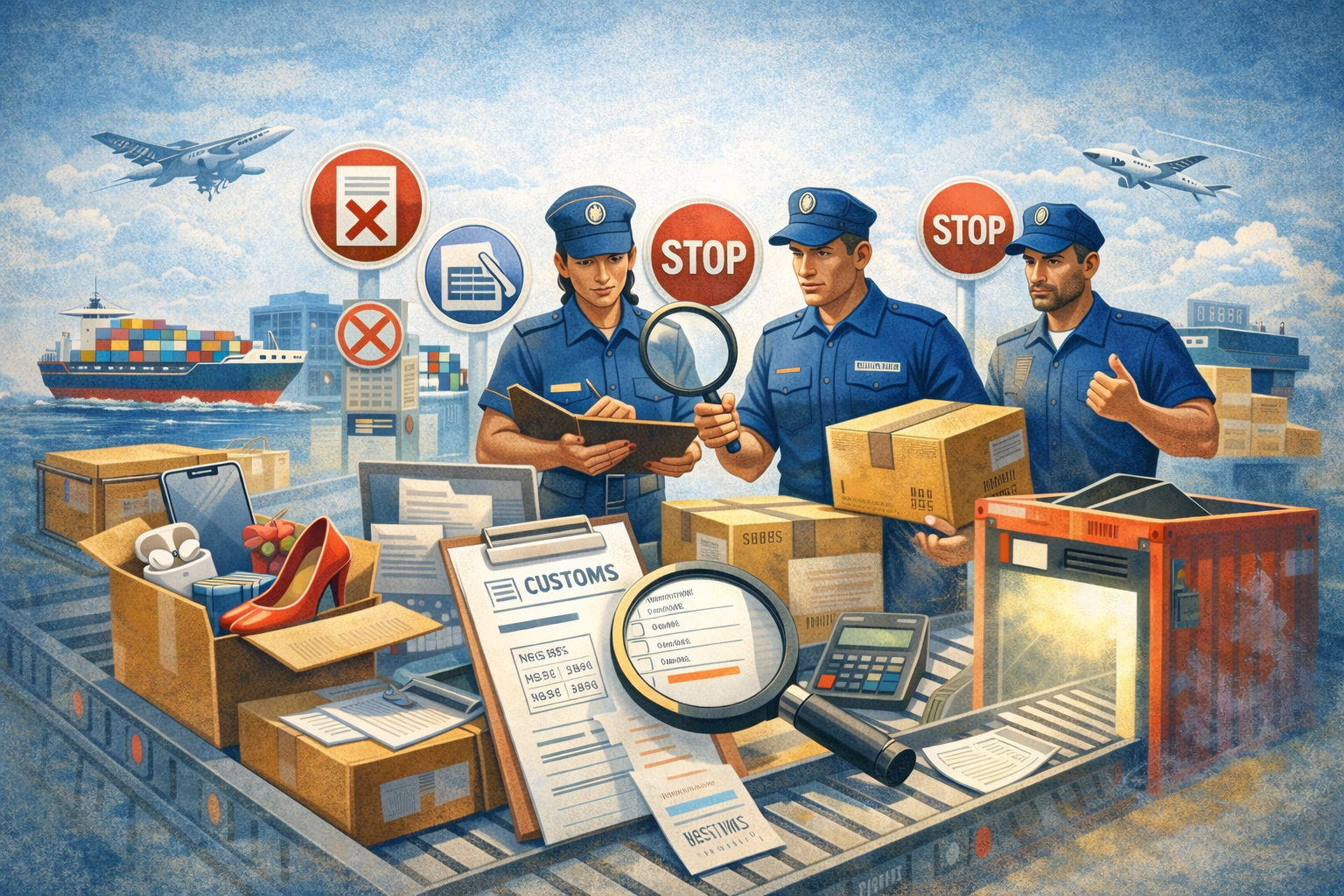
Based on ShippingToGo's analysis of shipment data, documentation errors account for over 60% of all customs delays, while regulatory compliance issues (restricted products, missing certifications) account for approximately 25%.
Top 5 Reasons Shipments Get Held at Customs
Reason #1: Incorrect HS or HTS Codes
One of the leading causes of customs delays is incorrect product classification. HS and HTS codes determine how goods are identified, taxed, and regulated at the border.
When a code is missing or inaccurate, customs authorities often flag the shipment for manual review, significantly delaying clearance. Manual reviews can add 3–10 business days to transit time.
Reason #2: Incomplete or Inaccurate Customs Documentation
Customs requires precise documentation, including commercial invoices, packing lists, and declared values. Missing fields, mismatched data, or vague product descriptions often result in shipment holds.
Even small documentation errors can trigger inspections and additional compliance checks. A description of "clothing" instead of "women's cotton t-shirt, 200g, size M" is enough to flag a shipment.
Reason #3: Incorrect Duty & Tax Handling (DDP vs DDU)
Many delays occur because duties and taxes are not handled correctly. When it is unclear who is responsible for payment, shipments may be held until fees are settled.
This is especially common when sellers do not clearly define whether a shipment is sent as DDP (Delivered Duty Paid) or DDU (Delivered Duty Unpaid).
Reason #4: Lack of Synchronization Between Store, Warehouse, and Carrier
Inconsistent data between ecommerce platforms, logistics warehouses, and carrier systems often causes customs mismatches. Different addresses, values, or product descriptions across systems raise red flags for customs authorities.
Without system integration, resolving these discrepancies can take days or even weeks.
Reason #5: Regulatory Restrictions and Special Product Controls
Certain products are subject to additional regulations, certifications, or import restrictions. These include cosmetics, supplements, electronics, and branded goods.
If required approvals or declarations are missing, shipments may be delayed or rejected entirely.
The Real Cost of Customs Delays
Customs delays are not just an inconvenience — they have measurable financial impact on every stakeholder in the supply chain.
| Cost Type | Typical Range | Who Bears It |
|---|---|---|
| Storage / demurrage fees | $40–$150 per day | Importer / seller |
| Customs inspection fees | $100–$500 per inspection | Importer |
| Reshipment if rejected | Full original shipping cost | Seller |
| Customer refunds / chargebacks | Full order value | Seller |
| Brand reputation damage | Difficult to quantify | Seller |
- Storage and demurrage fees
- Delayed refunds and customer complaints
- Increased return and reshipment costs
- Damage to brand reputation
For high-volume ecommerce and logistics operations, even small delays can quickly scale into major losses.
DDP vs. DDU: Understanding the Difference
One of the most consequential decisions in cross-border shipping is whether to ship DDP or DDU. Getting this wrong is a leading cause of customs holds.
| Factor | DDP (Delivered Duty Paid) | DDU (Delivered Duty Unpaid) |
|---|---|---|
| Who pays import duties | Seller | Buyer |
| Customer experience | No surprise charges — better | Buyer may face unexpected fees |
| Complexity for seller | Higher — requires pre-calculation | Lower |
| Risk of customs hold | Lower — duties pre-paid | Higher — buyer may not pay promptly |
| Common use case | B2C ecommerce, D2C brands | B2B, experienced importers |
How ShippingToGo Prevents Customs Clearance Delays
ShippingToGo helps ecommerce sellers and logistics warehouses avoid customs delays through automation, validation, and system integration.
- HS/HTS code validation before shipment
- Automated customs documentation generation
- Pre-calculated duties and taxes
- Integrated data flow between store, warehouse, and carriers
- Clear DDP/DDU handling
Best Practices to Avoid Shipments Getting Stuck
- Use accurate and consistent product data — same product description, weight, and value across your store, warehouse, and shipping label.
- Verify HS/HTS codes regularly — codes change periodically and vary by destination country.
- Automate customs documentation — manual entry introduces errors; automated generation from product master data eliminates them.
- Ensure full system synchronization — store, warehouse management system, and carrier platforms must share the same data.
- Check restricted product lists before shipping to new markets — especially for electronics, supplements, cosmetics, and branded goods.
For more guidance on documentation best practices, see our complete commercial invoice guide and our eCommerce international shipping guide.
Frequently Asked Questions
Why is my shipment stuck at customs?
The most common reasons shipments are held at customs include: incorrect or missing HS/HTS codes, incomplete commercial invoices with vague descriptions or wrong values, unclear duty payment terms (DDP vs DDU confusion), inconsistent data between store and carrier systems, and missing product certifications for regulated goods such as electronics or cosmetics.
How long does customs clearance take?
Standard customs clearance for well-documented shipments typically takes 1–3 business days. Shipments flagged for inspection add 3–10 business days. Documentation errors that require correction from the shipper can cause delays of 2–4 weeks. Automated, pre-validated documentation can reduce clearance to just hours on established trade lanes.
What is the difference between DDP and DDU shipping?
DDP (Delivered Duty Paid) means the seller pre-pays all import duties and taxes — the buyer receives goods with no surprise charges. DDU (Delivered Duty Unpaid) means the buyer pays duties upon delivery. DDP creates a better customer experience; DDU is simpler for the seller but increases the risk of the buyer refusing to pay, causing a return.
How do I find the correct HS code for my product?
HS codes can be found via the World Customs Organization (WCO) database, your national customs authority's tariff classification portal, or ShippingToGo's integrated HS code lookup. For complex products, a customs broker can provide a binding ruling. Using the wrong HS code — even accidentally — can trigger manual inspection and duty reassessment.
Can customs delays be predicted or avoided in advance?
Most documentation-related customs delays are entirely preventable with the right systems. Using automated documentation generation, HS code validation, and data synchronization between your ecommerce platform and carrier reduces delay risk significantly. Seasonal peak periods (November–January) also see higher inspection rates globally — build extra buffer time into delivery estimates.
Conclusion
Customs clearance delays are not inevitable. Most issues are preventable with the right systems, data accuracy, and automation.
By using ShippingToGo, ecommerce sellers and logistics warehouses turn customs compliance from a risk into a competitive advantage.
