

International relocation mistakes can cost $2,000–$15,000 in fines, storage fees, damaged goods, and avoidable taxes. The 15 errors outlined below — from incomplete inventory lists to missing insurance — are the most common reasons relocations go over budget. Avoiding even half of them can save you thousands and weeks of delay.
International relocation is often presented as an exciting new chapter — but behind the scenes, it is a highly regulated and logistically complex operation.
This is not a "how-to" guide. This is an anti-guide: a breakdown of the most common and expensive mistakes people make when relocating internationally — mistakes that lead to delays, fines, damaged belongings, and unexpected bills.
If you are planning a relocation abroad, avoiding these errors can easily save you $2,000–$15,000+.
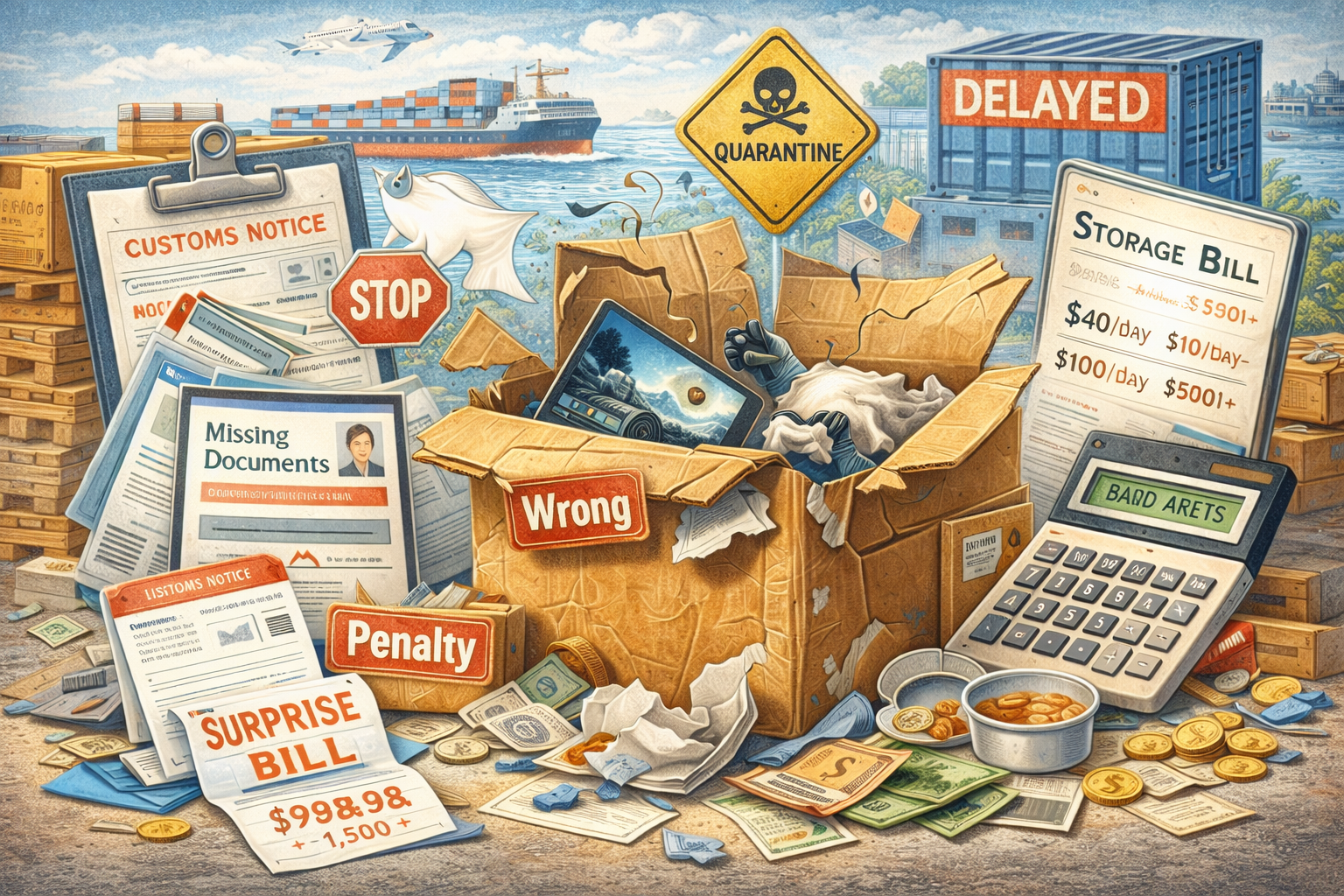
Based on ShippingToGo's analysis of international relocation cases, documentation errors and incorrect shipping method selection are the two most frequent — and most expensive — problems our customers encounter. The good news: both are entirely preventable.
1. Incorrect or Incomplete Inventory List
Customs authorities require a detailed inventory of your household goods. Vague descriptions like "kitchen items" or "personal belongings" often trigger inspections.
Cost impact: Storage & inspection fees of $300–$1,200
2. Under-declaring or Over-declaring Item Value
Declaring values too low raises suspicion. Declaring values too high can result in unnecessary taxes.
Cost impact: Fines or excess duties of $500–$3,000
3. No Proof of Ownership for Used Items
Many countries require proof that household goods were owned and used prior to relocation. Original purchase receipts, credit card statements, or photographs with date metadata can serve as documentation.
Cost impact: Import taxes or seizure — $1,000+
4. Choosing the Wrong Shipping Method
Air freight for large volumes or sea freight for urgent relocations often backfires. Air freight is 5–10x more expensive per kg than sea freight, making it unsuitable for full household moves.
Cost impact: Overpaying $1,500–$5,000
5. Poor Packaging of Household Goods
Improper packing is one of the leading causes of damage during relocation. Professional double-wall boxes and proper padding are not optional for fragile items.
Cost impact: Damaged items worth $500–$10,000
6. No Relocation Insurance (or Wrong Coverage)
Basic carrier liability rarely covers real replacement value — standard sea freight liability is approximately $0.50 per kg. A 500 kg shipment with $5,000 of goods could result in just $250 compensation if something goes wrong.
Cost impact: Total loss with zero meaningful compensation
7. Missing Customs Forms
A single missing document can freeze your shipment for weeks. Common missing documents include the household goods declaration, proof of residency, and destination country import permits.
Cost impact: Storage fees of $40–$150 per day
8. Ignoring Destination Country Import Rules
Each country has different rules for electronics, alcohol, books, tools, and more. Some countries restrict used mattresses, certain plants, or items manufactured in sanctioned countries.
Cost impact: Confiscation or forced re-export
9. Shipping Restricted or Prohibited Items
Items like batteries, drones, supplements, or cosmetics can trigger customs blocks. Lithium batteries require special packaging and declaration; certain supplements are controlled substances in some countries.
Cost impact: Fines of $300–$2,500
10. No Synchronization Between Shipper, Warehouse & Customs
Manual coordination leads to mismatched data and delays. When warehouse data, carrier manifests, and customs declarations don't match, customs holds are the frequent result.
Cost impact: Delays of weeks + extra handling fees
11. Incorrect Address or Contact Details
Customs may require a local contact for clearance. An incorrect phone number or address can result in a failed delivery with the shipment returned or stored at the recipient's expense.
Cost impact: Failed delivery & re-routing costs
12. Assuming "Personal Goods = Tax Free"
Many countries still apply VAT or processing fees on personal items above threshold values. The UAE, for example, applies a 5% VAT on most imports above AED 1,000.
Cost impact: Surprise taxes of 10%–25%
13. No Timeline Buffer
Relocation rarely follows airline-style schedules. Sea freight can vary by 1–2 weeks; customs processing adds additional variability. Always plan for at least 30% buffer time beyond the carrier's estimated transit.
Cost impact: Temporary housing & replacement purchases
14. Using Multiple Vendors With No Central Control
Fragmented responsibility creates chaos. When four different companies handle packing, warehousing, shipping, and customs with no central coordinator, problems are untraceable.
Cost impact: Untraceable delays and disputes
15. No Digital Visibility Over the Process
Without tracking and documentation visibility, problems are discovered too late. Real-time tracking and digitized documentation allow issues to be caught before they escalate.
Cost impact: Compounded delays and costs
Summary: Common Relocation Mistakes and Their Cost Impact
| Mistake | Estimated Cost Impact | How to Prevent |
|---|---|---|
| Incomplete inventory list | $300–$1,200 | Itemize every box with detailed descriptions |
| Wrong declared values | $500–$3,000 | Declare actual purchase value for each item |
| Wrong shipping method | $1,500–$5,000 | Compare air vs. sea based on volume and urgency |
| Poor packaging | $500–$10,000 | Use professional packing for all fragile goods |
| No insurance | Total loss | Always purchase comprehensive relocation insurance |
| Missing customs forms | $40–$150 per day | Use automated documentation platforms |
| Restricted items | $300–$2,500 | Check destination country prohibited items list |
How ShippingToGo Prevents These Mistakes
ShippingToGo centralizes the entire relocation logistics process into one digital platform.
- Structured inventory and value declarations
- Automated customs documentation
- Shipping method optimization
- Integrated warehouse & customs workflows
- End-to-end tracking and transparency
For more guidance on international shipping documentation, see our commercial invoice guide and our article on preventing customs clearance delays.
Conclusion: Relocation Is Expensive — Mistakes Make It Worse
International relocation will never be "cheap" — but it doesn't have to be chaotic or financially destructive.
Avoiding these mistakes is the difference between a controlled transition and a logistical nightmare.
With ShippingToGo, relocation becomes structured, predictable, and significantly safer.
Frequently Asked Questions
What are the most expensive international relocation mistakes?
The most costly mistakes include incorrect inventory lists ($300–$1,200), wrong declared values ($500–$3,000 in fines), choosing the wrong shipping method ($1,500–$5,000 in overpayment), no relocation insurance (potential total loss), and missing customs forms ($40–$150 per day in storage fees while the shipment is held.
How much does international relocation cost?
A standard household move from Israel to Europe typically costs $3,000–$8,000 by sea freight. Air freight for the same volume costs $15,000+. Mistakes in documentation, insurance selection, or shipping method can add $2,000–$15,000 to baseline costs. Using a platform like ShippingToGo to compare rates and automate documentation reduces both base costs and risk.
What documents are needed for international relocation?
Required documents typically include: a detailed itemized household goods inventory with declared values, proof of ownership for used items, customs declaration forms for the destination country, and proof of residency or visa documentation. Specific requirements vary by destination — always check with your destination country's customs authority before shipping.
Do I need relocation insurance?
Yes — strongly recommended. Basic carrier liability for sea freight covers approximately $0.50 per kg, meaning a 500 kg shipment worth $5,000 might receive only $250 in compensation for total loss. Comprehensive relocation insurance covers full replacement value and is available from most freight forwarders and insurers.
How do I avoid customs delays when relocating internationally?
Avoid customs delays by preparing a detailed, itemized inventory with accurate declared values; including proof of ownership for used goods; researching destination country import restrictions; ensuring all required customs forms are complete and signed; and using an integrated logistics platform that synchronizes warehouse, carrier, and customs data automatically.
Can I ship my car or pet when relocating internationally?
Yes, but both require additional documentation and planning. Vehicles require title documents, de-registration, and destination country import permits — duties of 10–100% of vehicle value may apply. Pets require up-to-date vaccination records, microchipping, and health certificates. Some countries impose quarantine periods of 10–180 days.
