

The single biggest way to save money on international shipping is to reduce your package's dimensional volume and compare carriers before every booking. Switching from express to standard shipping saves 30-70%; right-sizing your box saves another 10-30% on dimensional weight charges. Based on ShippingToGo's shipping data, customers who compare at least two carriers save an average of 18-25% per international shipment.
Shipping abroad can be expensive – but in many cases, the final price is higher than it needs to be. Wrong box size, inefficient packing, the wrong service level, or misunderstanding how rates are calculated can easily add up to hundreds of dollars a year. This guide will show you how to save money on international shipping, reduce package volume, avoid customs surprises, and pay only for what you really need.
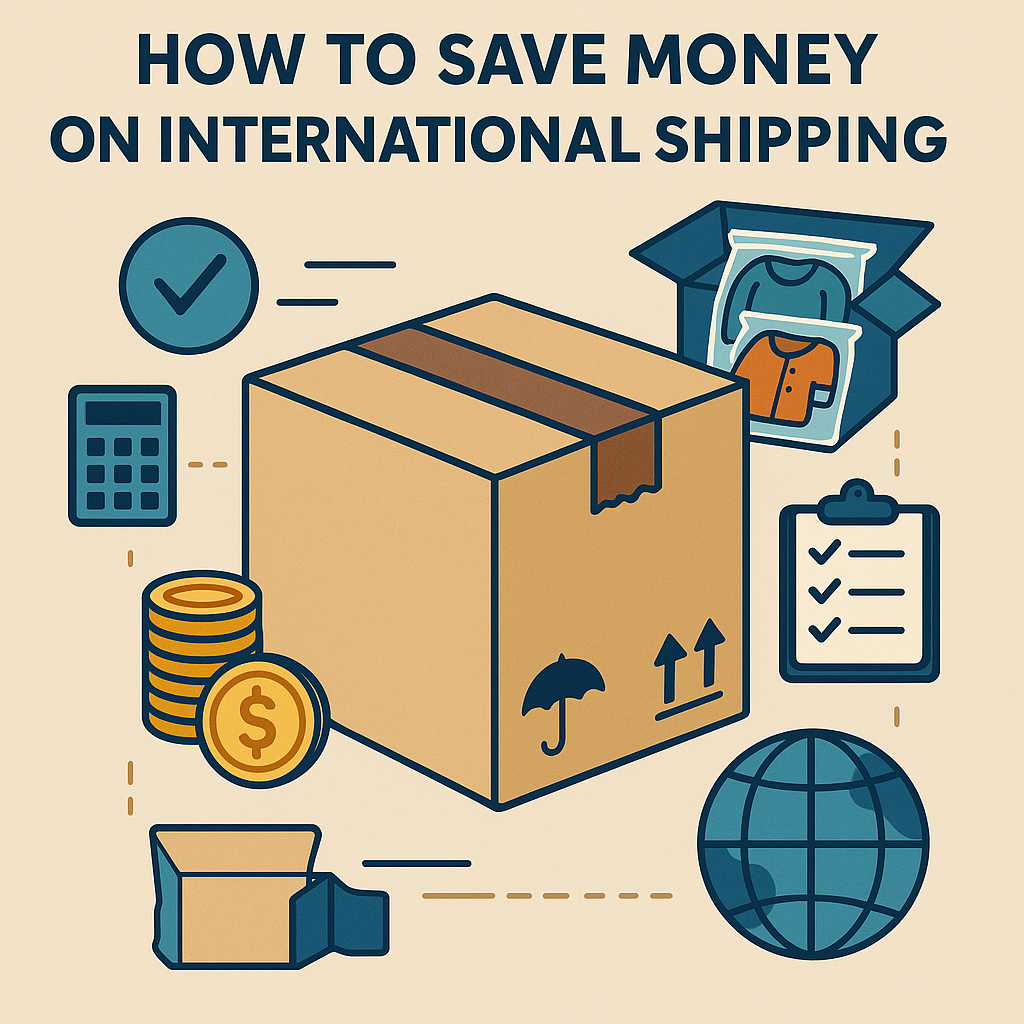
What Really Affects the Price of International Shipping?
To start saving, it's essential to understand how carriers calculate their prices. In most cases, the rate is determined by a combination of:
- Actual weight: How much the package weighs on the scale.
- Dimensional (volumetric) weight: The size of the box (length × width × height). If the package is large but light, you will often be charged based on volume instead of actual weight.
- Destination country and zone: Remote areas or far destinations usually cost more.
- Service speed: Express services are more expensive than economy or deferred services.
- Additional services: Insurance, pickup from home, extended tracking, and other add-ons.
The conclusion is simple: if you want to save, the key is to reduce the package volume and choose a service level that truly fits your needs.
How Dimensional Weight Is Calculated
Most carriers calculate dimensional weight using the formula: (Length × Width × Height) ÷ 5,000 = dimensional weight in kg (using centimeters). If the dimensional weight is greater than the actual weight, you pay the dimensional weight rate.
Example: A box measuring 40cm × 30cm × 30cm = 36,000 cm³ ÷ 5,000 = 7.2 kg dimensional weight. If the actual contents weigh only 3 kg, you would pay for 7.2 kg — more than double. Reducing the box to 30cm × 25cm × 25cm brings dimensional weight to 3.75 kg, much closer to the actual weight.
Based on ShippingToGo's analysis, oversize packaging accounts for approximately 25-30% of excess shipping costs for e-commerce businesses. Matching box size to contents is one of the fastest ways to reduce your shipping bill immediately.
Reducing Package Volume – Your #1 Saving Opportunity
In most shipments – especially clothing, textiles, toys, and light items – volume is what drives the price up. Here's how to shrink it:
Use the Smallest Possible Box
The most common mistake is using a box that is "comfortable" rather than efficient. Every extra centimeter of empty space costs money. Choose a box that fits the contents as closely as possible without crushing them.
Vacuum Bags for Clothing and Textiles
If you're shipping clothing, bedding, or other soft items, vacuum bags can reduce the volume dramatically. This is especially useful in relocation shipments or seasonal clothing shipments.
Disassemble Before You Pack
Small furniture, stands, plastic or metal frames, and bulky toys should be disassembled whenever possible. Disassembled items take up less room and can be packed more safely and tightly.
Remove Bulky Retail Packaging
Retail boxes often look nice on a store shelf but waste a lot of space in a shipping carton. For non-fragile items, consider removing the original packaging and packing multiple items together in a single, well-padded box.
What Not to Ship – and What's Better to Buy at Destination
To really cut costs, you must accept that not every item is worth shipping. Sometimes it's cheaper to buy locally than to pay for shipping volume and weight.
Items Often Cheaper to Buy There
- Basic, low-cost furniture: Simple flat-pack or budget furniture is usually cheaper to buy locally than to ship internationally.
- Standard kitchenware: Everyday pots, pans, glasses, and plates are widely available in most countries at reasonable prices.
- Cleaning supplies and consumables: Heavy, bulky, and sometimes restricted in shipping due to chemicals.
- Large quantities of books: Books are heavy and costly to ship in bulk. Keep only a small selection with strong sentimental or practical value.
Items Worth Considering for Shipping
- Sentimental and irreplaceable items: Artwork, photo albums, family memorabilia – anything with emotional value that can't be easily replaced.
- Professional or hobby equipment: Specialized tools, photography gear, musical instruments, and similar high-value items.
- High-quality textiles: Bedding, towels, or specific fabrics that are expensive or hard to find in the destination country.
The golden rule: compare the cost of shipping vs. the cost of buying new. If purchasing locally is significantly cheaper – don't ship it.
Smart Packing: Protecting the Shipment Without Inflating the Box
Saving money doesn't mean compromising on protection. The trick is to protect items efficiently without inflating the box size.
Choose Efficient Packing Materials
- Give preference to bubble wrap combined with packing paper rather than overly thick foam blocks.
- Use crumpled paper or air pillows to fill small gaps instead of large pieces of styrofoam.
- Make sure there are no "empty pockets" inside the box – any open space allows movement and increases the chance of damage.
Don't Mix Heavy and Fragile in the Same Box
A common mistake is packing heavy items together with fragile ones. That heavy tool or book can crush a delicate item during transit, even if both are wrapped.
Label Everything Clearly
Labelling doesn't reduce the price directly, but it prevents damage and claims:
- Mark "Fragile" where relevant.
- Indicate "This Side Up" on boxes with a clear top and bottom.
- Write sender and recipient details, phone number, and tracking number on the box.
Choosing the Right Shipping Service – Faster Isn't Always Smarter
Another question that greatly affects cost is service level: express vs. standard vs. economy. Not every shipment needs to arrive "yesterday."
When to Choose an Express Service
- For original documents or time-sensitive paperwork.
- For a single high-value item, such as expensive electronics.
- When there's a clear deadline – an event, exhibition, or urgent customer delivery.
When a More Economic Service Makes Sense
- For clothing, textiles, personal items, and non-urgent gifts.
- For personal shipments where exact arrival date isn't critical.
- When items are not particularly sensitive and a few extra days don't matter.
In many cases, switching from express to a standard service can reduce the shipping cost by tens of percent.
| Service Level | Typical Transit Time | Relative Cost | Best For |
|---|---|---|---|
| Express | 1-5 business days | Highest (3-5x economy) | Documents, urgent, high-value |
| Standard | 5-14 business days | Medium | Most commercial shipments |
| Economy | 10-21 business days | Lowest | Non-urgent, personal items |
If you're unsure which option fits best, you can consult the experts at ShippingToGo's express shipping methods guide for a clearer comparison of available services.
Avoiding Customs Surprises – A Critical Part of Saving Money
Even if you reduce volume and choose a cheaper service, misunderstanding customs rules can lead to unexpected expenses.
Declare the Correct Value
Always declare a realistic value for your goods. Undervaluing can cause delays, fines, or issues with insurance claims. Overstating the value will make you pay more taxes and duties than necessary.
Know the Tax Thresholds in the Destination Country
Many countries have a tax-free threshold – below a certain amount, no customs duties or local VAT are charged. Check this in advance and consider splitting shipments so each one stays under the threshold where possible and allowed.
Avoid Problematic Items
Some items are restricted, heavily regulated, or expensive to clear through customs, such as:
- Certain batteries and hazardous materials.
- Food, alcohol, and tobacco.
- Cosmetics and chemicals.
Before shipping, verify that your items are allowed into the destination country and that you understand any additional paperwork or fees required.
Shipment Consolidation – When Combining Saves and When It Costs More
Many people assume that sending one large shipment is always cheaper than several small ones. In reality, this isn't always true.
When Consolidation Is a Good Idea
- When sending multiple non-urgent items to the same address.
- When there is a minimum charge per shipment and it's better to "fill" the box.
- When pickup or customs handling fees are fixed, regardless of volume.
When Splitting Shipments Can Be Smarter
- When a combined shipment exceeds the tax-free threshold in the destination country.
- When part of the shipment is urgent and part is not.
- When combining heavy and fragile items in one box could increase the risk of damage.
Quick Check List Before Sending Any Package Abroad
Before you tape the box and book the shipment, go through this short checklist:
- Did I choose the smallest box that still protects the contents?
- Did I reduce the volume – vacuum bags, disassembly, removing unnecessary packaging?
- Is it really worth shipping every item, or is it cheaper to buy some of them at destination?
- Did I choose the right service level (express/standard/economy) for this specific shipment?
- Is everything packed tightly and securely, with no empty spaces?
- Do I understand the customs and tax rules in the destination country?
- Did I declare an honest and accurate value for the goods?
- Did I compare at least two carrier options on ShippingToGo before booking?
Conclusion: Smart International Shipping Starts with Smart Planning
Saving money on international shipping is not magic – it's the result of smart planning, efficient packing, and conscious service selection. When you reduce volume, avoid shipping items that are cheaper to replace, choose the right delivery speed, and understand customs rules in advance, you can easily save significant amounts on every shipment.
If you're planning a large shipment, a relocation, or simply want to be sure you're not overpaying, the expert team at ShippingToGo – Relocation Shipping Cost Guide can help you choose the safest and most cost-effective path for your needs.
For more tips, see also how to reduce shipping costs for businesses and cheapest ways to ship internationally.
Frequently Asked Questions
What is the single best way to save money on international shipping?
Reducing your package's dimensional volume is the single most impactful saving. Use the smallest box that safely contains your items, apply vacuum bags for clothing and textiles, and remove bulky retail packaging. Combined with comparing carrier rates on ShippingToGo, these two steps can reduce most international shipping bills by 25-40%.
How much cheaper is economy vs. express international shipping?
Economy or standard international shipping is typically 30-70% cheaper than express for the same package. For example, a 2 kg parcel that costs $80 express might cost $25-$40 on a 7-14 day economy service. The savings are largest on heavy packages and long-distance routes like Europe-to-Australia or U.S.-to-Asia.
How do I avoid unexpected customs charges when shipping internationally?
Declare an accurate and honest value on your commercial invoice. Research the destination country's duty-free import threshold before shipping — many countries exempt shipments below a certain value from customs duties. Avoid restricted items that require special permits. ShippingToGo's booking flow flags common customs issues for your destination automatically.
Should I use vacuum bags to reduce shipping costs?
Yes, for clothing, bedding, and soft textiles. Vacuum bags can reduce the volume of soft items by 50-70%, dramatically lowering dimensional weight. This is especially useful for relocation shipments and seasonal clothing. Compress items fully, seal the bag, and pack in a box sized to the compressed dimensions rather than the original bulky size.
Is it worth buying items at the destination instead of shipping them?
For heavy, bulky, or inexpensive items — yes. Standard furniture, kitchenware, cleaning supplies, and books are almost always cheaper to buy locally than to ship internationally. Ship only sentimental items, specialized professional equipment, hard-to-find goods, or high-quality textiles that are significantly more expensive at your destination.
