

Ecommerce return rates average 20-30% across most product categories, according to industry data. For every return, merchants face reverse shipping costs, warehouse handling, and potential inventory loss. ShippingToGo's automated parcel return system connects ecommerce stores, logistics warehouses, and carrier networks into a single flow — cutting processing time from days to minutes.
Ecommerce has grown rapidly over the last few years — and with it, one of the most complex aspects of online sales: managing parcel returns. Customers expect returns to be as simple as the original purchase. When the process is slow or unclear, both merchants and logistics warehouses / fulfillment centers feel the impact: higher costs, manual work, and delays.
In this article, we explore the main challenges behind ecommerce and logistics warehouse returns, the operational pain points, and how a smart parcel return system can transform returns into a powerful efficiency and loyalty engine.
Why are ecommerce and warehouse returns so challenging?
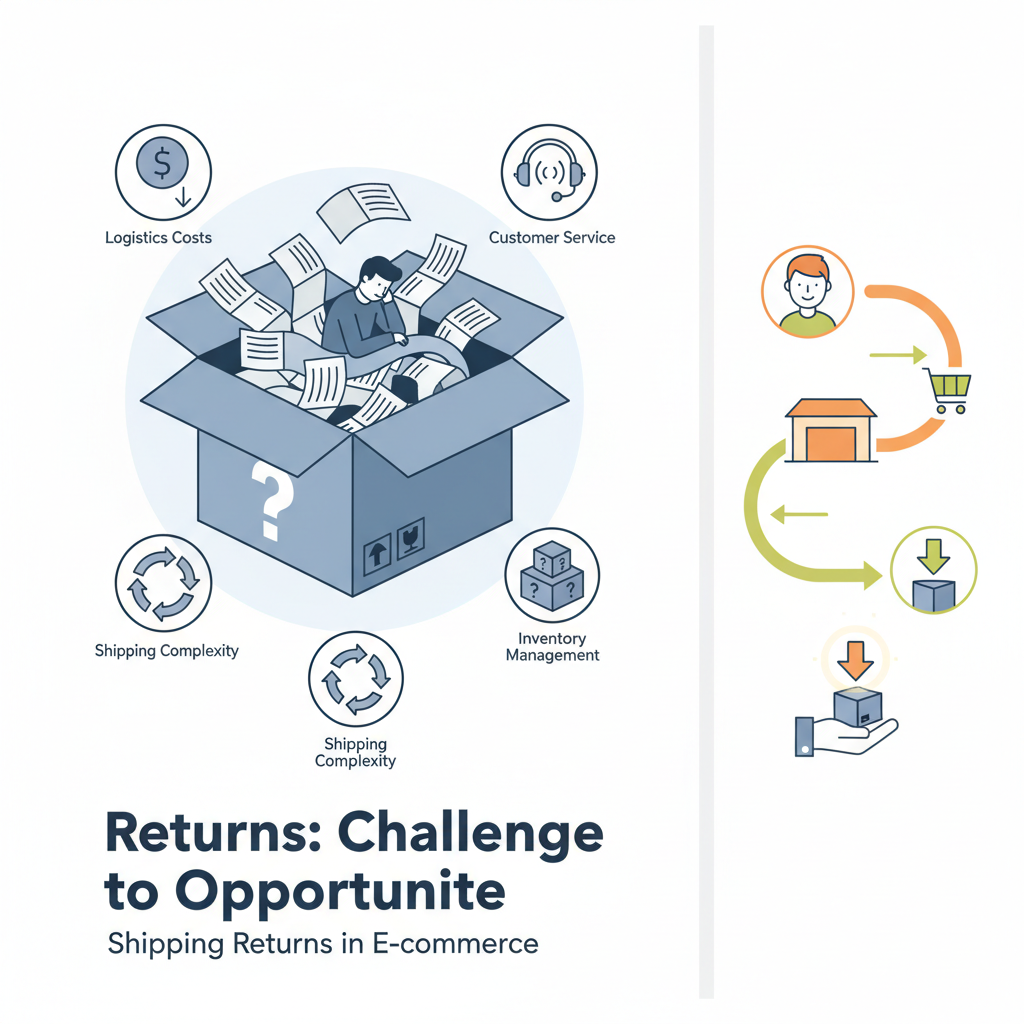
Returns are a normal part of online shopping. Wrong size, wrong color, damaged goods — things happen. But behind every return is a complex chain involving:
- The ecommerce store
- The logistics warehouse / 3PL fulfillment center
- The carrier network
- The customer
Each return requires coordination between multiple systems and teams. When not handled correctly, it becomes a bottleneck for both customer service and warehouse operations.
According to industry research by the National Retail Federation, return processing costs average $10-$20 per item when handled manually. Businesses using automated return platforms reduce this cost by 40-60% by eliminating manual coordination steps.
Main challenges include:
- Logistics costs — reverse shipping, handling, storage and reprocessing.
- Customer service overload — "Where is my return?" and "How do I send it back?"
- Warehouse disruption — returned items must be inspected, verified and sorted.
- Inventory distortion — returned units remain unavailable until fully processed.
- Multi-carrier complexity — different services, rules and SLAs.
Customer pain points in the return journey
The return moment is a critical trust point for brands and warehouses. Common issues include:
- Complicated instructions and manual emails
- Unclear policy and refund timelines
- Warehouse address confusion
- No courier choice or pricing transparency
- No tracking visibility for the customer
A poor return experience damages customer trust. A smooth one increases repeat purchases and improves warehouse flow.
Based on ShippingToGo's analysis of merchant data, ecommerce stores offering a self-service return portal see up to 25% higher repeat purchase rates compared to those relying on manual return processes.
How returns work without automation
Many online stores still process returns manually: customers email support, receive long instructions, ship packages manually, and support + warehouse teams must match incoming boxes with orders.
This approach does not scale — especially when order volume increases.
A mid-sized ecommerce business processing 100 orders per day typically handles 20-30 returns daily. At 15 minutes of manual work per return, that is 5-7 hours of staff time lost every day — time that an automated system eliminates entirely.
Smart parcel return system: how it works
A smart automated return system connects the ecommerce store, the logistics warehouse / WMS, and the carrier network into one seamless flow.
Example of an automated return flow
- Customer selects a return directly from order history.
- Store redirects to a dedicated ShippingToGo return page.
- API call loads the order details automatically.
- Return form is pre-filled with customer & shipment data.
- Courier selection shows prices and delivery times.
- Instant return label is emailed to the customer.
- Warehouse notification updates the WMS instantly.
- Tracking visibility for merchant, warehouse and customer.
Business value: why a return system is an investment
- Less manual work: Reduced emails, fewer warehouse tasks.
- Cost control: Define rules for free vs. paid returns.
- Better customer experience: Clear and guided return steps.
- Data & analytics: Understand what products are returned and why.
- Faster inventory turnaround: Returned items are processed and restocked quickly.
- Higher scalability: Handle more returns without hiring more staff.
| Metric | Manual Returns Process | Automated Returns (ShippingToGo) |
|---|---|---|
| Time to label generation | 24-48 hours | Under 5 minutes |
| Staff time per return | 15-20 minutes | Near zero |
| Customer satisfaction | Low (no self-service) | High (self-service portal) |
| WMS update speed | Manual, hours to days | Instant via API |
| International documentation | Manual, error-prone | Auto-generated |
| Tracking visibility | Carrier-only | Unified portal for all parties |
Extra value for international returns
- Carrier integrations: Select optimal services by region.
- Automatic documentation: Declarations & invoices generated instantly.
- Address validation: Prevent errors and delays.
- Unified tracking: Full visibility across the return chain.
International returns are particularly complex — cross-border returns require customs declarations, commercial invoices for returned goods, and carrier selection matched to the origin country's options. ShippingToGo handles all of this automatically, supporting returns from over 200 countries and territories via DHL, FedEx, and UPS networks.
Implementation: connecting store + warehouse
- Connect your ecommerce store to ShippingToGo API.
- Connect ShippingToGo to your WMS or ERP.
- Define your return rules and warehouse routing logic.
- Create a branded return page for your customers.
- Test the flow with real orders.
Once live, the system operates 24/7 — even when your support or warehouse teams are offline.
Related ShippingToGo Resources
- International Shipping Methods — Compare Air, Sea and Courier
- Express Shipping Methods — Fastest International Options
- Track Your Shipment in Real Time
Conclusion: turning returns into a growth engine
Returns don't have to be a painful part of ecommerce. With a smart return system bridging the ecommerce store, the logistics warehouse and the carrier network, returns become faster, cheaper and more efficient.
Merchants and fulfillment centers using ShippingToGo enjoy happier customers, smoother warehouse operations and higher retention.
Frequently Asked Questions
How does ShippingToGo's parcel return system work?
ShippingToGo's return system connects your ecommerce store to a dedicated returns portal. Customers select items from their order history, are redirected to ShippingToGo's return page, and the system automatically loads order details via API. Customers choose a courier, receive a label instantly, and the merchant and warehouse receive real-time notifications.
What couriers are available for parcel returns through ShippingToGo?
ShippingToGo partners with major international couriers including FedEx, UPS, and DHL for return shipments. Options vary by region and include economy (7-15 days), standard (5-10 days), and priority (2-5 days) services. Pricing ranges from free returns to paid options depending on your configuration.
How much does it cost to set up an automated return system?
ShippingToGo's return system pricing depends on your shipment volume and integration requirements. Businesses can define rules for free versus paid returns, controlling cost exposure. Contact ShippingToGo for a tailored quote based on your monthly return volume and courier preferences.
How long does the return process take with ShippingToGo?
The digital part — from customer initiating the return to receiving a label — takes under 5 minutes. Physical transit time depends on the courier and distance: express returns take 2-5 business days internationally, while economy returns take 7-15 business days. Warehouse processing time depends on your WMS configuration.
What documents are generated automatically for international parcel returns?
ShippingToGo automatically generates customs declarations, commercial invoices for returned goods, shipping labels, and return confirmations. For international returns, the system creates all required export and import documentation, eliminating manual paperwork and reducing the risk of customs delays.
Can ShippingToGo integrate with my WMS or ERP system?
Yes. ShippingToGo connects to warehouse management systems (WMS) and ERP platforms via API. When a return is initiated, the WMS receives an instant notification so warehouse staff can prepare for the incoming item. This reduces processing delays and keeps inventory data accurate.
