

When Israeli airspace closes, international packages don't disappear — they reroute. Cargo is redirected through European hubs like Frankfurt and Liege, or Gulf hubs like Doha and Dubai, typically adding 3 to 10 business days to standard transit times. This guide explains exactly what happens to your package during a closure, how to track it, and what you can do to minimize disruption.
At ShippingToGo we believe our customers deserve clear, practical information during any shipping disruption — not marketing language, and not alarmism. This guide is based on operational patterns from multiple regional airspace closures over the past three years, and on the real routing decisions major carriers have made during those events.
ShippingToGo maintains active relationships with DHL, FedEx, UPS, and a network of local couriers, which means when one routing path is disrupted, we usually have alternatives. International shipping is built to be resilient. Understanding how that resilience works helps you plan with confidence instead of uncertainty.
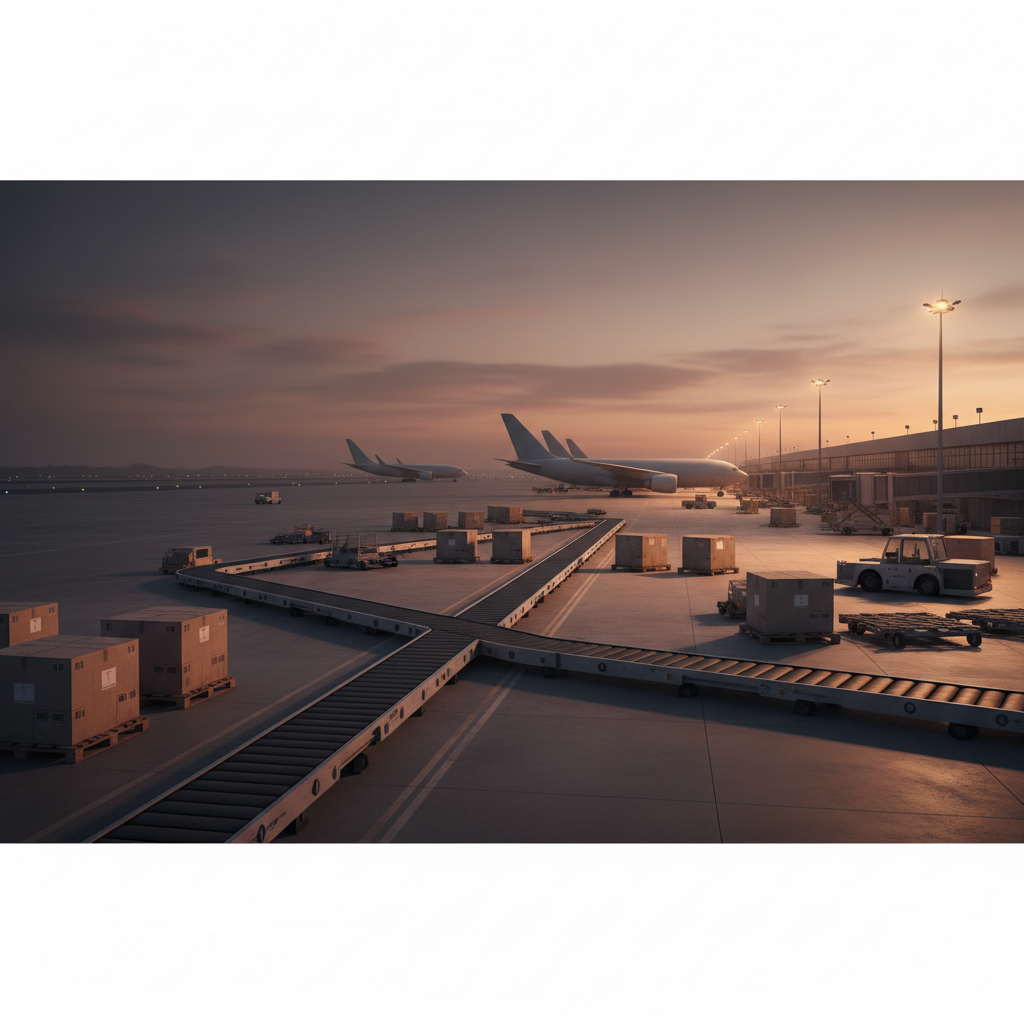
Israeli airspace has experienced multiple closures and restrictions over the past several years, with significant events in October 2023, October 2024, June 2025, and February–April 2026. During the most recent closure, an IATA analysis reported approximately 2,400 weekly flight operations across Europe, the Middle East, and Asia-Pacific required rerouting. Cargo capacity tightened, with carriers prioritizing high-value and time-sensitive shipments over general freight.
What Actually Happens to Your Package
When airspace closes, the courier network activates contingency routing. Packages move through a predictable sequence of states:
| Package Status | What It Means | Your Action |
|---|---|---|
| Awaiting pickup | Not yet collected — safe to cancel or reschedule | Cancel if non-urgent; ShippingToGo refunds fully |
| In transit — origin hub | Held at origin courier facility | Wait. Package is tracked and secure |
| Rerouted via alternative hub | Moving through Frankfurt, Liege, Doha, or Dubai | Monitor tracking; add 3–10 days to ETA |
| Held at destination border | Awaiting customs or final-mile resumption | No action needed; releases automatically |
| Out for delivery | Normal final-mile delivery | Expect standard last-mile timing |
Cargo Capacity During Closures
Most international packages travel in the cargo hold of passenger aircraft — what the industry calls PAX belly capacity. When passenger flights are reduced, belly capacity tightens immediately. Carriers respond by prioritizing high-value express shipments over general freight, which means economy services are often the first to experience delays.
Dedicated freighters continue operating on rerouted air lanes, primarily through Doha, Dubai, and when available, Ben Gurion. During the March 2026 closure, El Al limited outbound passenger operations to seven destinations, and Israir and Arkia significantly reduced schedules, with Arkia shifting part of operations to Egypt and Jordan.
Ocean freight remains a stable alternative for non-urgent shipments. Israeli ports stayed operational throughout recent events, though major shipping lines continuously review route safety near Eastern Mediterranean and Gulf corridors.
How ShippingToGo Reduces Your Disruption
Because ShippingToGo works with multiple carriers simultaneously, we can compare live routing options during a closure and recommend the fastest available path for your shipment. This is a practical advantage of multi-carrier booking over single-carrier accounts: when one network is constrained, another may be operating normally.
Customers with time-sensitive cargo can contact our support team for a manual routing assessment before booking. For non-urgent shipments, waiting 48 hours often results in faster delivery than booking during peak disruption.
5 Steps to Take When Airspace Closes
- Check your tracking first — most status changes happen within 24 hours of an event. Before calling anyone, open the tracking link and see where your package currently is.
- Don't book new non-urgent shipments for 48 hours — capacity tightens fastest in the first two days. Waiting often means a faster delivery than booking immediately.
- For urgent shipments, compare carriers on ShippingToGo — one carrier may be disrupted while another is still operating on the same route.
- Consider ocean freight for bulk cargo — ports typically remain operational even when airspace is restricted. Transit is slower but predictable.
- Confirm declared-value insurance is active — extended delays increase handling touchpoints. Insurance protects against rare loss or damage scenarios.
Frequently Asked Questions
Will my package be lost if the airspace is closed?
No. Packages already in the courier network are held at origin or transit hubs until routing resumes. Cargo is tracked, insured, and stored in secure facilities throughout any delay. Losses are extremely rare in these situations — the normal outcome is a longer transit time, not a lost shipment.
How long are typical delays during an airspace closure?
Historically, closures of Israeli airspace have lasted from a few days to two to three weeks. Cargo rerouting through European hubs (Frankfurt, Liege) or Gulf hubs (Doha, Dubai) typically adds 3–10 business days to standard transit times. The exact delay depends on the carrier, the origin country, and how quickly PAX belly capacity returns.
Can I cancel my shipment and get a refund during a closure?
If your shipment has not yet been picked up, you can cancel and receive a full refund through the ShippingToGo platform. If the shipment is already in transit, cancellation is usually not possible — but most carriers waive service-level guarantees during declared disruptions, which may entitle you to partial compensation.
Should I keep shipping during an airspace closure, or wait?
For non-urgent shipments, waiting a few days until the situation stabilizes often results in faster delivery than booking during peak disruption. For urgent shipments, ShippingToGo can route via alternative carriers and hubs that may still be operating. Contact our team to assess your specific route before booking.
Does ShippingToGo offer insurance against emergency delays?
Standard shipping insurance covers loss and damage, not delays. During extended airspace closures, carriers typically declare force majeure, which suspends delivery guarantees. For time-critical cargo, ShippingToGo recommends booking express services with multiple routing options and keeping declared-value insurance active to protect against rare loss scenarios.
Related guides: Customs Clearance Delays Guide | When Your Package Is Lost in International Shipping | International Express Shipping Tracking
© 2026 ShippingToGo — International courier and shipping services made simple.
About ShippingToGo
ShippingToGo is a leading shipping comparison platform helping businesses and individuals find the best courier rates for international shipping. With real-time rate comparison from DHL, FedEx, and UPS across 200+ countries, ShippingToGo provides expert guidance on shipping costs, customs procedures, logistics planning, and navigating disruption when it occurs.
